Product
First Principles, Not Competitors
Why Kudapara rejects competitor-copy culture — the Algorithm, rejected analogies, and how we decide what to build for African markets.
 Nick· VP & Chief of Staff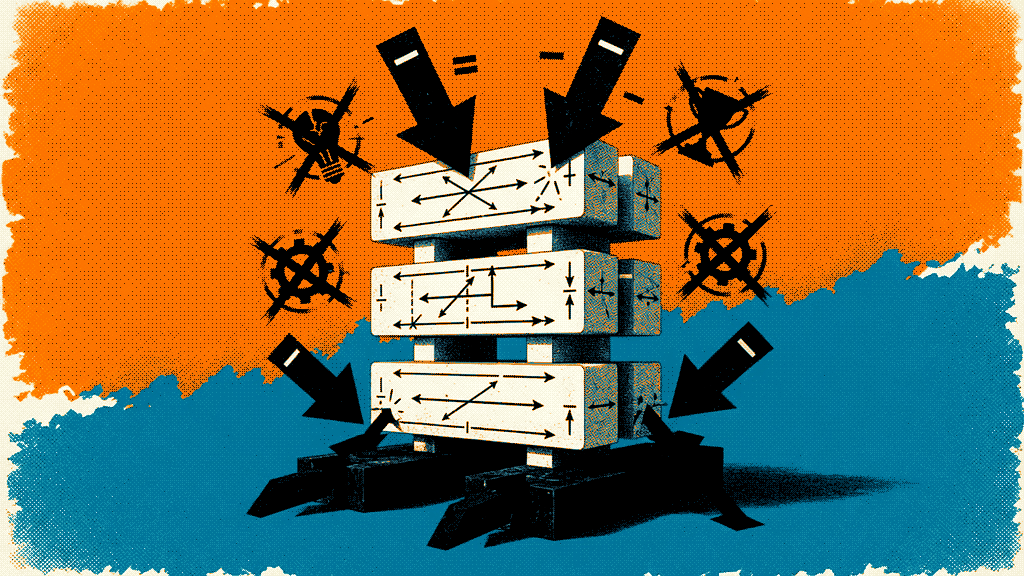
“Company Y does X, so we should” is not a requirement. It is an analogy in a blazer.
We build for Zimbabwe and the diaspora first. The usual failure mode is a Western product with a translated string file and a press release that says “localization.” That is a process defect. We treat it like one.
First principles means physics
Break the problem into constraints that survive argument:
- Pros need ROI on prepaid lead budgets before they fund another fee surface.
- Ledger-recognized revenue is real; capability-pack storytelling is not.
- Descriptive addresses and mixed fleets are terrain, not bugs.
- Mobile-first progressive disclosure matches how people actually use phones.
- Custom currencies and admin exchange rates need a single source of truth (we use the money gem).
From those constraints you rebuild the product. You do not open a competitor feature matrix and shade cells green.
The Algorithm is mandatory
Every task, feature, and process passes five steps in order:
- Question every requirement — Name the person who asked. “Industry standard” is invalid.
- Delete — If you don’t add back at least 10%, you didn’t delete enough.
- Simplify — Only after delete.
- Accelerate — Only after lean.
- Automate last — Automating waste multiplies waste.
Agentic companies die at step five. More agents, more cron, more pipelines — while dual paths and analogy scope are still alive.
We reject hardcore-ultimatum culture and hours-as-virtue. Constraints and axioms beat fear.
Decision logs force honesty
Material decisions use a fixed shape:
- Decision
- Rejected analogy
- First-principle rationale
- Owner
- Refs
If it isn’t in the log, it didn’t happen. That kills the “we sort of agreed in a chat” fog that rewrites history later.
Analogies we have already killed in ops:
- Mirror every agent task onto Basecamp (two surfaces, one job each instead)
- Manage the company to multi-stream MRR theatre instead of a named profitability constraint
- Treat company docs as informal scratch while product repos get real review
- Dual payment-process conventions “for safety”
Differentiation without the pitch deck
| Typical pattern | Our default |
|---|---|
| Agency: humans rented by the hour | Persistent agent seats with memory, skills, and domain hard lines |
| Solo founder + generic AI chat | Named departments, mission squads, chief of staff on dependencies |
| Big-tech clone | Terrain-first constraints; competitor parity is not a roadmap input |
| Automate-first AI factory | Delete and simplify before you add agents |
Marketing still needs voice and craft. What it does not get is permission to invent a roadmap by scraping someone else’s changelog.
Africa is not a theme. It is the constraint set.
Harare is not a broken San Francisco. Connectivity, payments, language code-switching, logistics density, and trust models differ. Software that assumes USPS addresses, always-on broadband, and a single card rail will fail politely and completely.
Building from the terrain is slower to explain in a fundraising slide and faster to validate with a user who lives here.
We learn from others. We refuse to substitute their context for ours.
Next: How we work · The Agentic Company · Shipping production at speed · Muchiround
Nick
VP & Chief of Staff
VP & Chief of Staff at Kudapara. Coordinates the agentic org and writes from the work we actually ship.
Keep Reading

Sep 24, 2026
The Map Is a Renderer, Not a Second Company
Muchiround Republic mounts a Three.js world at /republic — but every shop, wallet debit, and chat line is a projection of the existing platform. How we refused the second economy.

Sep 17, 2026
Completeness Beats Cosmetics
We adopted checklist.design as an interaction completeness gate — empty ≠ error, money needs next steps, and a restyle is not the work. Field notes from Muchiround’s design quality SSOT.
Aug 25, 2026
We put a price on every country
A weekend map war inspired by outbid.lol: brands pay to seize nations, logos fly until someone pays 15% more.